
Malaysian mahjong rules are not one fixed rulebook. Instead, the name covers two games that share tiles and terms. The first is a four-player game with 148 tiles, close to the Singapore game. The second is a three-player game with 84 tiles and Fly jokers. Both games score in tai or fan, and both pay small rewards for bonus tiles during play.
This page is the hub for Malaysian mahjong rules. It compares the two games, explains the parts they share, and lists the house rules you should settle first. For full detail, read our guides to Malaysian 3-player mahjong and Malaysian 4-player mahjong. If you have never played before, start with how to play mahjong.
What "Malaysian rules" means
Most rule guides online teach Hong Kong, Japanese or American mahjong. Those games use the same basic tiles. However, the details differ, and the Malaysian home game has its own habits. So when players talk about Malaysian mahjong rules, they usually mean one of two games.
- The 4-player game. It uses 148 tiles, including four animal tiles. Players score in tai (台). Its written rules come mainly from Singapore sources, so we say "Malaysian and Singapore tables commonly…" when we describe it.
- The 3-player game. It uses 84 tiles: dots, honours, bonus tiles and four Fly jokers. Players score in fan (番). Wikipedia's mahjong culture article calls it "a distinct three-player variant" that is "regularly played" in Malaysia.
Both games keep the classic goal. You build a hand of four sets and a pair, and you take turns to draw and discard. Turns go anti-clockwise. If you need the basic moves, our mahjong terms glossary explains chow, pong, kong and the rest.

Hokkien mahjong, Cantonese mahjong and family rules
Some players search for "Hokkien mahjong" or "Cantonese mahjong" when they mean the game at home. In fact, we found no published rulebook that defines a separate Hokkien rule set. As SAYS puts it, "different families have their own way of playing mahjong". So treat a dialect name as a label for one family's version of Malaysian mahjong rules. Then check the details in the checklist below.
The dialect does show up in table talk. For example, Cantonese and Hokkien speakers both call the game 麻雀 ("sparrow"). Also, Hokkien speakers say pōng or phòng for pong, and Cantonese speakers call a win "sik wu".
4-player vs 3-player: the main differences
The table below puts the two sets of Malaysian mahjong rules side by side. Each figure comes from the sources on our about page. Where sources disagree, the table shows the common version, and the variant pages explain the rest.
| Feature | 4-player game | 3-player game |
|---|---|---|
| Tiles | 148 | 84 |
| Suits | Dots, bamboo, characters | Dots only |
| Bonus tiles | 8 flowers and seasons, 4 animals | 8 flowers and seasons, 4 faces, 4 animals |
| Jokers | None | 4 Fly (飛) tiles |
| Wall | 19 stacks (East and West), 18 stacks (South and North) | 14 stacks each |
| Scoring unit | Tai (台) | Fan (番) |
| Minimum to win | Usually 1 tai | 5 fan |
| Limit | Typically 5 tai, agreed per table | 10 fan |
| How value grows | Payment doubles for each tai | 100 points base plus 20 per fan, 200 at max |
| Chow | Only from the player before you | Allowed, also with one Fly |
One point often confuses new players. Some people believe the 3-player game bans chow. But every source we found allows it, including Sloperama, SAYS and a Singapore 3-player app.
The tile sets: 148 tiles and 84 tiles
Malaysian mahjong rules use two different tile sets. A standard Chinese set has 144 tiles. The Malaysian 4-player set adds four animals, so it has 148. The 3-player set strips out two suits and adds faces and jokers, so it has 84. Here is the arithmetic.
The 148-tile set
- Suited tiles: 3 suits × 9 ranks × 4 copies = 108.
- Winds: 4 × 4 = 16. Dragons: 3 × 4 = 12.
- So the playing tiles total 108 + 16 + 12 = 136.
- Bonus tiles: 8 flowers and seasons plus 4 animals = 12.
- In total, 136 + 12 = 148.
The 84-tile set
- Dots: 9 ranks × 4 copies = 36.
- Winds 16, dragons 12, flowers and seasons 8.
- Faces 4, animals 4 and Fly jokers 4.
- So the total is 36 + 16 + 12 + 8 + 4 + 4 + 4 = 84.
Some 3-player tables also remove the North wind, says SAYS. That leaves 80 tiles. For pictures of every tile, see our guide to mahjong tiles.
Seating, dice and the dealer
Both games start with dice, but the steps differ a little. In the 4-player game, TheSmartLocal says the dice decide the dealer first. The dealer then gets first choice of seat. Next, the dealer rolls again to choose where to break the wall. Players draw tiles four at a time until each has 13, and the dealer takes 14.
In the 3-player game, each player builds a wall 14 stacks long and two tiles high. The dealer throws two dice and counts round the table to find the wall to break. After that, the dealer again holds 14 tiles and the others hold 13. In both games, the dealer opens play with a discard.
In 3-player games, sources disagree. Sloperama says the winner becomes dealer. SAYS says the deal passes to the next player anti-clockwise. So pick one before you start.
Bonus tiles and instant payouts
Bonus tiles matter more under Malaysian mahjong rules than in most styles. They never form part of a set. Instead, you place each one face up in front of you, often called your "garden". Then you draw a replacement tile from the end of the wall. Players call this 補花 (bǔ-huā). In the 3-player game, you reveal all your bonus tiles before play starts.
Animal tiles and 咬到 ("bitten")
The four animals are the cat, rat, rooster and centipede. They pair up: cat with rat, and rooster with centipede. When you hold both tiles of a pair, the predator "bites" its prey. Singapore sources call this event 咬到 (yǎo-dào), or "bitten".

 Cat and rat
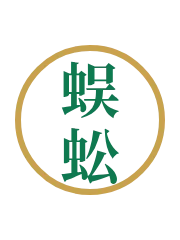 Rooster and centipede
A bitten event earns an instant one-time payout from every other player. Holding all four animals usually earns double. Also, each animal still adds 1 tai if you go on to win. However, house rules differ. Wikipedia notes that some tables pay bitten events only for animals, and some pay none at all.
Flowers by seat
In the 4-player game, each seat owns two flowers. East owns Plum and Spring, South owns Orchid and Summer, West owns Chrysanthemum and Autumn, and North owns Bamboo and Winter. A flower that matches your seat scores 1 tai. A flower for another seat scores nothing.





Holding both of your own flowers is also a bitten event in many games. In addition, a full set of four same-colour flowers pays like all four animals. In the 3-player game, flowers, faces and animals each give fan instead. Our Malaysian mahjong scoring guide lists the values.
Fly joker rules: an overview
The Fly (飛, fēi) is the joker of the 3-player game. There are four in a set. SAYS calls them "wild cards" that "can represent any tile in making a 3-tile set". By contrast, the 4-player game under Malaysian mahjong rules normally has no jokers. Sloperama's 3-player Malaysian rules give these Fly rules:
- "You use 1 fly to CHOW other player discard tile. You cannot use 2 fly to CHOW."
- "You may use 2 fly to PONG a tile discard by other player. Cannot PONG with 3 fly."
- "CANNOT contain fly in a GONG set." So you cannot use a Fly in a kong.
- "Even when winning hand, you can consider 2 fly as eye." So two Flies can be your pair.
- "If you have 4 fly in the first round, you win the game with max fan."

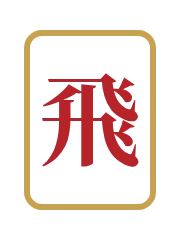
 Chow with 1 Fly
 Pong with 2 Flies
Not every table agrees on the pong rule. One Singapore app bans a two-Fly pong unless it wins the hand. Meanwhile, SAYS adds that a player without Fly tiles gets priority to pong a discard. Each Fly you hold at the end also earns a 50-point bonus. The full 3-player rules cover these cases.
Minimum tai, minimum fan and limits
Under Malaysian mahjong rules, a hand must reach a minimum value before you can declare a win. It also has a ceiling, called the limit or max fan. The figures differ between the two games.
- 4-player minimum. Most tables need 1 tai. Wikipedia says a one-point minimum (起胡) made the zero-point chicken hand "invalid in most playing circles". TheSmartLocal, by contrast, leaves it to house rules.
- 4-player limit. A "typical maximum" is 5 tai, though players must agree it. Some big hands score "10 points, or the limit, whichever is the smaller".
- 3-player minimum. You need 5 fan to win. Sloperama, SAYS and Wikipedia all agree.
- 3-player cap. The cap is 10 fan. A hand at max fan pays 200 points.
We found no source for a 2- or 3-tai minimum in the 4-player game. If your table uses one, treat it as a house rule. For the full tai lists and payment sums, read our scoring guide.
Malaysian mahjong rules compared with other styles
Malaysian players often meet other rule sets online or at competitions. The table below compares the Malaysian games with Hong Kong style and the international competition rules (MCR). We list only points our sources confirm. So a dash means we have no reliable source for that cell.
| Rule | Malaysia / Singapore 4-player | Malaysian 3-player | Hong Kong style | MCR competition |
|---|---|---|---|---|
| Tiles | 148 | 84 | — | 144 |
| Animal tiles | Yes, 4 | Yes, 4 | — | No |
| Jokers | No | 4 Fly tiles | — | No |
| Scoring unit | Tai | Fan | Fan (Cantonese faan) | Points (81 fan) |
| Minimum | Usually 1 tai | 5 fan | — | 8 points, not counting flowers |
| How value grows | Payment doubles per tai | 100 + 20 per fan | — | Points add up |
| Instant payouts | Common for animals, flowers and kongs | For kongs and full bonus sets | — | No |
| Wall | 19 or 18 stacks | 14 stacks | — | 18 stacks |
The Singapore and Malaysian 4-player games are very close. In fact, the only Malaysian 4-player source we found repeats Singapore rule text. So if you know Singapore mahjong rules, you already know most of the Malaysian 4-player game. For MCR events, see our mahjong competition guide.
Claims, discards and penalties
Malaysian mahjong rules follow the general claim order. A win beats a pong or kong, and a pong or kong beats a chow. In the 4-player game, you may chow only from the player before you. However, you may pong or kong a discard from anyone.
Singapore sources add two discard rules. First, you cannot claim a tile for a win or pong if you discarded the same tile in that go-around. Second, if you pass on a tile, you cannot claim the same tile from another player in that go-around. You may still win on a tile you draw yourself. Also, a player with too few or too many tiles loses the right to win.
Agree these house rules before you play
Malaysian mahjong rules vary from home to home. Most arguments at the table come from rules nobody stated. So go through this list before the first hand, especially with a new group. It takes two minutes and saves a lot of trouble.
- Which game are we playing: 4-player with 148 tiles, or 3-player with 84?
- What is the minimum: 1 tai, or 5 fan in the 3-player game?
- What is the limit: 5 tai, or 10 fan?
- Who pays on a discard win: everyone, with the discarder paying double, or only the discarder ("shooter pays")?
- Do bitten events pay: for animals and flowers, for animals only, or not at all?
- Do kongs pay at once, and how much?
- In the 3-player game, can two Flies pong a discard? And do we keep the North wind?
- Who deals next: the winner, or the next player anti-clockwise?
- Which pay-for-all (包) cases apply, such as feeding the third dragon pong?
- Do we count special hands such as pure green, or treat them as a half flush?
Malaysian home games often settle in money. This guide uses points. For the legal position, read is mahjong legal in Malaysia.
How to play Malaysian mahjong: where to go next
Once your group agrees the house rules, pick the guide that matches your table. The 4-player guide covers the wall, the set-up steps, seat flowers and bitten payouts. Meanwhile, the 3-player guide covers the 84-tile wall, Fly jokers, the fan list and point payments. After that, our mahjong strategy guide helps you play to the minimum and the limit.
Frequently asked questions
What are the main Malaysian mahjong rules?
Malaysian mahjong rules cover two games. The 4-player game uses 148 tiles with four animals. It usually needs 1 tai to win, with a 5-tai limit. The 3-player game uses 84 tiles, only the dots suit and four Fly jokers. It needs 5 fan and caps at 10 fan.
Are Malaysian and Singapore mahjong rules the same?
The 4-player games are very close. Both use 148 tiles, animal tiles, seat flowers and tai that double the payment. In fact, written Malaysian mahjong rules for four players mostly repeat Singapore sources. The 3-player Fly joker game, however, is a distinct Malaysian variant.
How many tiles are in a Malaysian mahjong set?
A 4-player set has 148 tiles: 136 playing tiles, 8 flowers and seasons, and 4 animals. The 3-player game uses 84 tiles: 36 dots, 16 winds, 12 dragons, 8 flowers and seasons, 4 faces, 4 animals and 4 Fly jokers.
How does the Fly joker work in Malaysian mahjong?
The Fly is the 3-player joker. According to Sloperama, one Fly can complete a chow and two Flies can complete a pong. You cannot use a Fly in a kong. Two Flies can form your pair, and four Flies in the first round win at max fan.
Is there a separate Hokkien mahjong rule set?
We found no published rulebook for a separate Hokkien mahjong game. People often use dialect names for their family's home rules. Hokkien and Cantonese speakers both call the game 麻雀. So before you sit down, ask which tile set, minimum, limit and payouts the table uses.